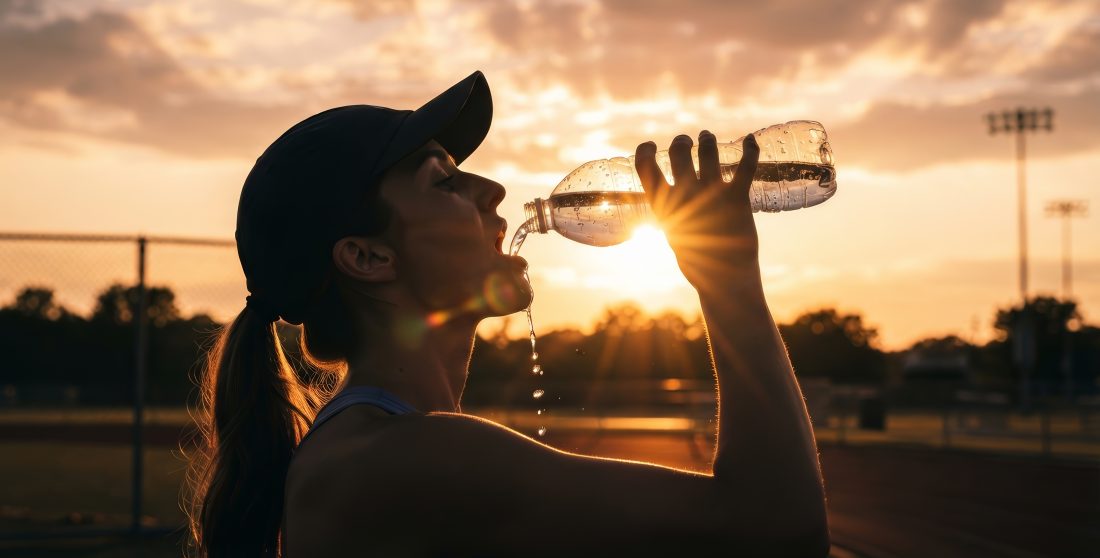
Why the body is more stressed in summer¹˒²
When the weather is hot, the body has to manage two challenges at the same time: producing the energy required for physical activity and dissipating the heat generated by the muscles. A significant portion of the energy expended during exercise is converted into heat, which the body mainly eliminates through sweating. As a result, at the same level of intensity, exercising in summer is more physically demanding than in winter, making post-workout recovery just as important as the workout itself.
Key habits for effective recovery²˒³
- Rehydrate gradually: drink regularly in small amounts rather than consuming a large quantity all at once. Do not wait until you feel thirsty, as thirst is already a sign that dehydration has begun.
- Cool the body gently: choose a lukewarm shower rather than an ice-cold one to avoid unnecessary thermal shock.
- Eat a balanced meal within an hour after exercise: prioritize a combination of carbohydrates and proteins to replenish energy stores and support muscle recovery.
- Allow the body to rest: recovery time, especially after intense exercise, helps muscle tissues repair and regenerate.
Warning signs not to ignore³
Even with these precautions, certain symptoms after exercising in summer should not be overlooked:
- Unusual fatigue or persistent weakness
- Recurring muscle cramps
- Headaches or dizziness
- Nausea
These symptoms may indicate dehydration or an electrolyte imbalance, particularly in individuals who are not accustomed to exercising in hot conditions.
Hydrafizz, UPSA’s effervescent solution, combines water, sugar, and electrolytes to support proper hydration after physical activity.
References:
(1) Santé publique France – Bulletin épidémiologique hebdomadaire, Chaleur et performance sportive. Available at : www.santepubliquefrance.fr
(2) Institut national du sport, de l’expertise et de la performance (Insep) – Fiches récupération : sommeil, nutrition, hydratation. Available at : www.insep.fr
(3) Fédération Française de Cardiologie – Conseils pour bien récupérer après le sport. Available at : www.fedecardio.org